 01
Metal Roof Repair
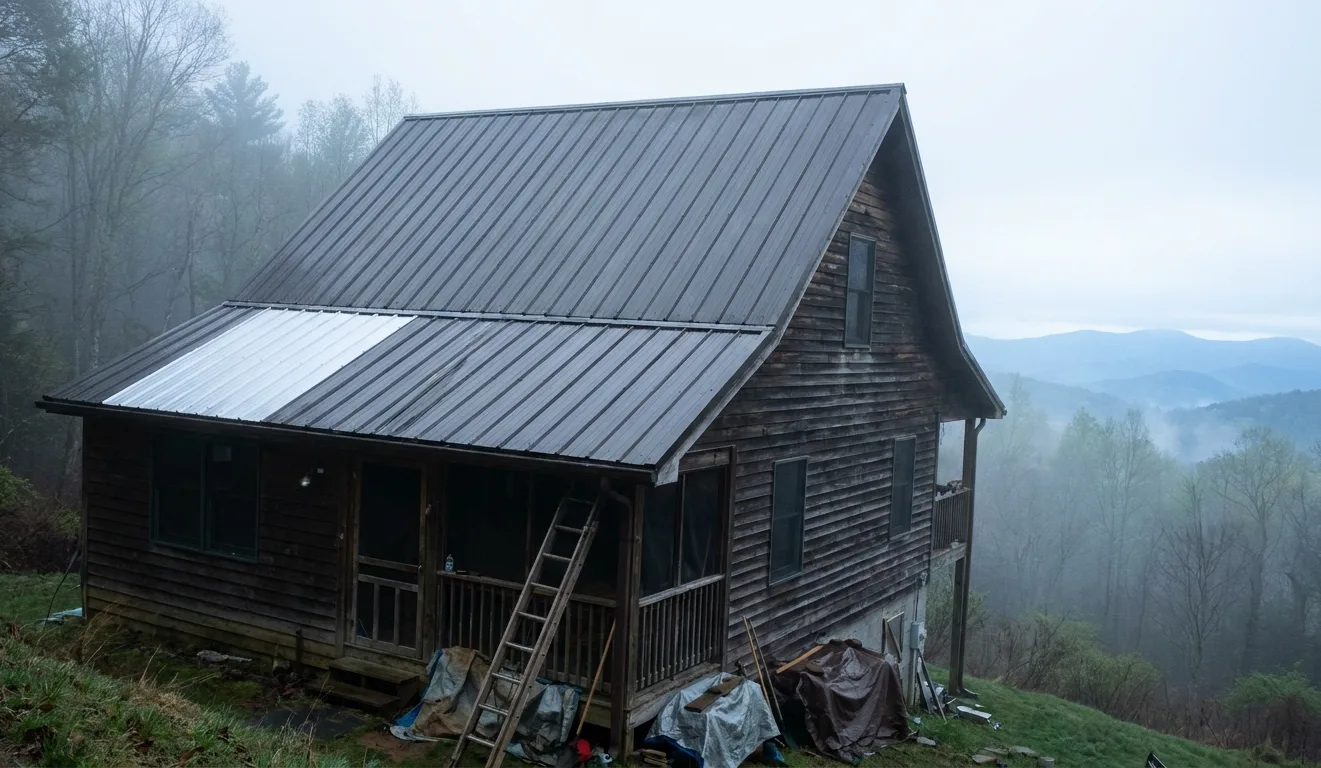
Fasteners back out on metal roofs after freeze and thaw cycles. We replace loose screws, add butyl washers, and seal side laps where water travels under the panels during wind driven rain.

Roofing · the USA
Hometown Smoky Roofing Repair sends technicians to homes across the USA to locate and fix roof leaks, damaged flashing, and weather-worn seams on every slope and surface.
We start at the ridge and work down each slope noting every seam, fastener, and transition where water finds its way inside.
Our trucks carry matching shingles, metal panels, and sealants so the repair matches the existing roof without extra trips.
On steep slopes we set proper anchors and work in pairs so every valley and ridge cap stays secure during the fix.
Each service targets a common failure point on residential roofs. Our technicians carry the tools to work on metal, asphalt, and tile without cutting corners at any joint or penetration.
01Fasteners back out on metal roofs after freeze and thaw cycles. We replace loose screws, add butyl washers, and seal side laps where water travels under the panels during wind driven rain.
 02
Step flashing around chimneys often rusts or pulls away from mortar joints. We cut new counter flashing, tuck it into the brick, and bed it in sealant so rain no longer channels behind the masonry.
 03
Pipe boots crack from sun exposure and let water run down the vent pipe. We remove the old boot, slide a new one into place, and seal it to both the pipe and the surrounding shingles.
 04
Skylight curbs collect debris in damp shade and the seals fail. We clean the curb, replace the flashing apron, and add a new layer of membrane that ties into the existing roof slope.
 05
Hail dents the soft aluminum panels and fractures granule surfaces. We mark each impact, replace damaged sections, and blend new material so the roof drains correctly again.
 06
When a tree limb or storm tears a hole we secure a weighted tarp over the opening. The tarp directs water to the gutters until permanent patches can be installed on the decking.
 07
Rotten fascia lets gutters pull away and water soak into the eaves. We cut out the damaged wood, install new boards, and vent the soffit panels so moisture escapes the attic space.
 08
Valleys collect leaves and hold moisture under trees. We lift the shingles, install new metal valley liners, and weave fresh shingles back across the center to restore the water path.
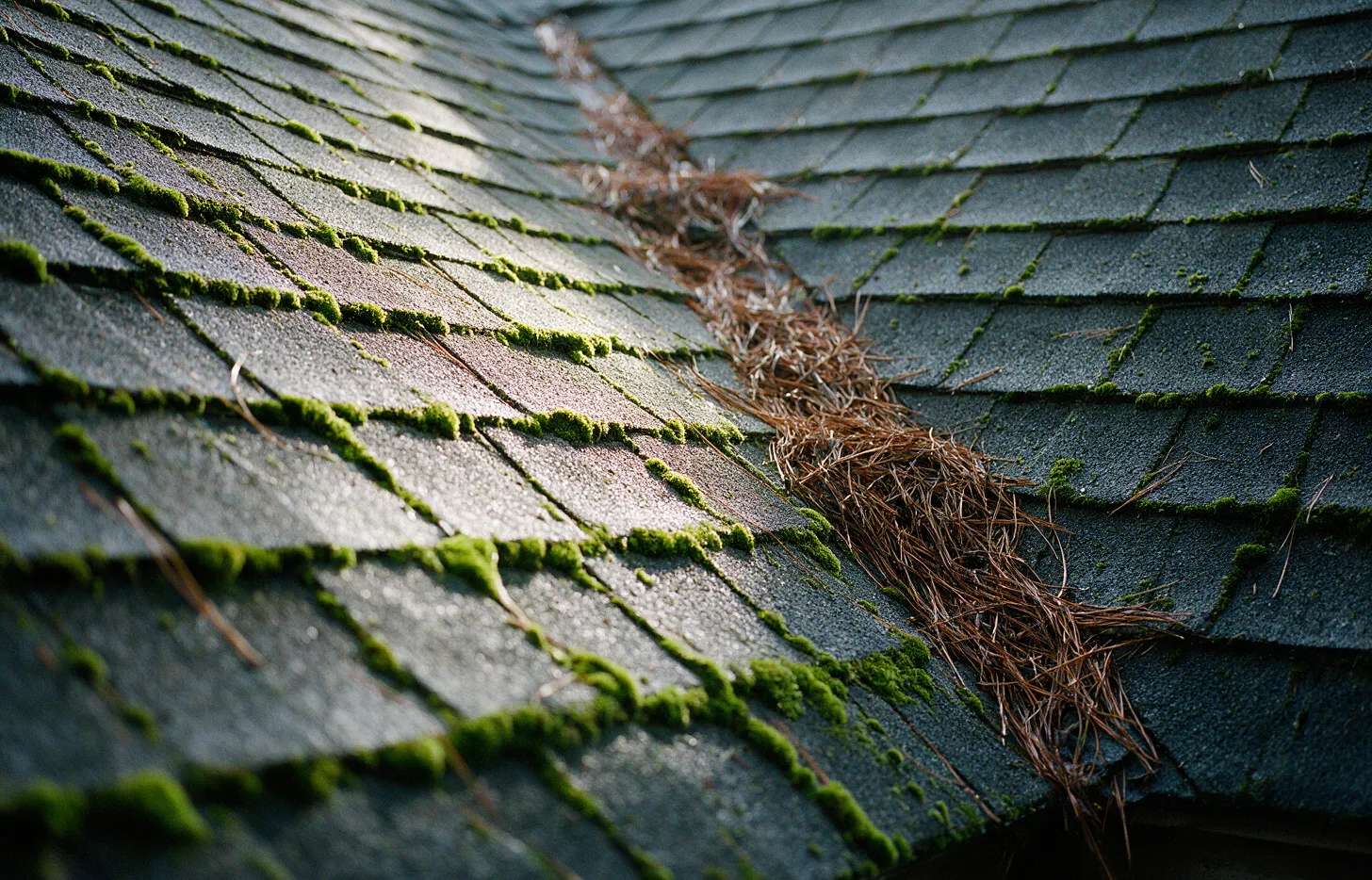
Dark streaks under the eaves or on ceilings often start where a valley meets a wall or where a vent boot has dried out. On roofs shaded by trees moss can hold water against the shingles and soften the mat until granules wash away. Steep slopes shed water quickly but any lifted tab lets wind driven rain reach the underlayment. Homeowners notice these signs first when they walk around the house after heavy rain.
Move furniture and place buckets under the active drip to protect floors. Note the room and the direction of the leak so the crew can trace it back to the roof penetration or seam once they arrive. Avoid climbing onto wet shingles yourself. Instead mark the spot from the ground with a photo and wait for technicians who can work safely on the slope.
Our process keeps every step visible to the homeowner so there are no surprises once the crew reaches the roof deck.
We start at ground level looking for sagging gutters, missing ridge caps, and water stains on soffits that point to the leak source before any ladder goes up.
Inside the attic we trace moisture stains back to the penetration or valley so the repair targets the actual entry point instead of guessing from the top side.
On the roof we remove only the affected courses, replace soft decking if needed, and weave new material into the existing pattern so water flows away from seams.
After the patch we walk the repaired area with a hose to confirm no new drips appear at the valley or around the vent before leaving the property.
Technicians walk the perimeter first to spot missing ridge caps or sagging gutters. They then move to the attic to confirm the water path before opening the roof surface. Once the exact location is marked they remove only the damaged courses, inspect the decking for softness, and install new underlayment and shingles that match the existing color and thickness.
A repair works when the surrounding roof still has solid tabs and intact valleys. If three or more slopes show widespread granule loss or the underlayment has pulled away from the deck the crew explains that patching will only move the next leak to an adjacent area. Homeowners decide based on the condition report and the remaining life of the existing materials.
The number of layers already on the roof changes how many courses must be lifted to reach the deck. Steep slopes require extra safety equipment and more time to work safely. Access around chimneys or skylights adds steps because each flashing must be cut and tucked correctly. Material type matters too since metal panels need different fasteners and sealants than asphalt shingles.
Older homes often have multiple layers and custom flashings around dormers that need individual attention. Rental properties see more traffic on the roof from HVAC service so we check for bent vent boots and loose pipe jacks. In both cases we document the existing layers and recommend repairs that keep the structure watertight without disturbing sound portions of the roof.
Homeowners can place tarps weighted with sandbags over an obvious hole from the ground but climbing on wet or steep slopes risks falls and further damage to shingles. Wait for technicians who have proper anchors and can work from the ridge down.
We carry a range of shingle colors and metal panel profiles so the new material blends with the existing roof. The patch is installed to follow the same nailing pattern and overlap sequence used on the original installation.
Moss and leaf buildup in shaded valleys trap moisture. We clean the area, install a new valley liner with higher ribs, and trim back low branches so future debris does not collect in the same spot.
Most single penetration repairs are finished in one visit. Larger areas around multiple skylights or long valleys may require a second day to allow sealants to cure before final inspection.
Yes. We document the condition of the roof before and after each visit so property managers have a clear record of what was repaired and why the work was needed at that time.
We cut out the damaged section, install new plywood that matches the existing thickness, and tie it into the surrounding decking before laying fresh underlayment and shingles so the repair rests on solid wood.
Contact Hometown Smoky Roofing Repair when you notice leaks around vents or valleys. Our technicians arrive ready to work on any slope or surface.